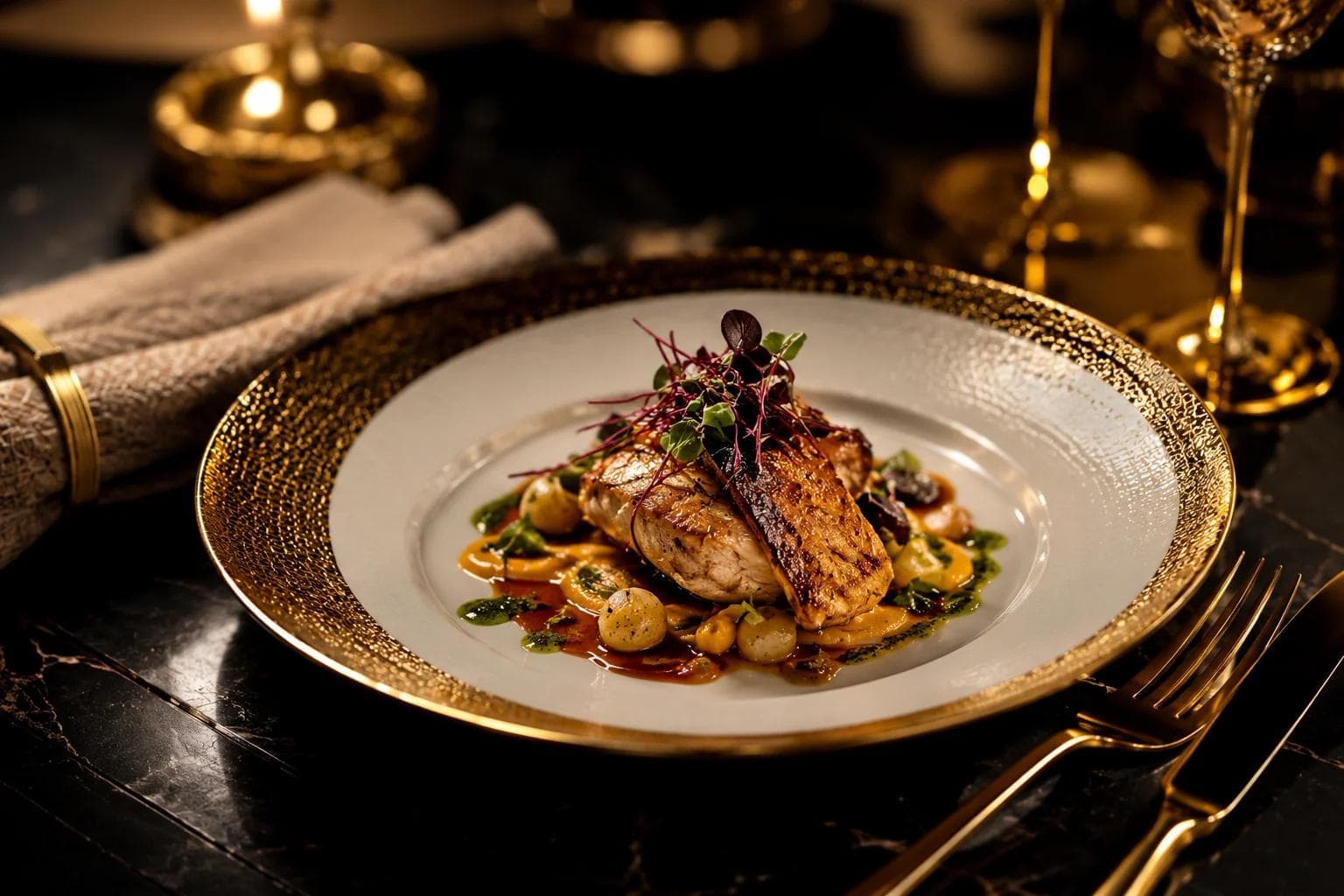
Culinary Architecture: Plating as Spatial Art
Plating as spatial art — how negative space, photometric timing, and service choreography turn a table into a stage.
A plate is not merely a vessel for sustenance; it is a three-dimensional landscape where texture, light, and geometry dictate the diner's emotional state before the first bite.
I. Epigraph & Thesis
In fine dining, the distinction between a memorable meal and a transformative sensory experience rarely lies in technical gastronomy alone. It lies in spatial storytelling—the deliberate alignment of physical environment, visual staging, and culinary execution. When a multi-course dinner is served within a private estate or bespoke venue, each dish functions as a micro-architectural pavilion presented within the broader structure of the room.
The thesis of culinary architecture is straightforward: plating cannot exist in isolation from the space in which it is consumed. To achieve quiet resonance, a menu must be choreographed in complete harmony with lighting levels, table geometry, service tempo, and acoustic dampening. When culinary art and spatial design merge, the table ceases to be furniture—it becomes a stage for an unfolding theatrical narrative.
II. The Invisible Architecture
Long before the palate registers flavor, the human eye processes volume, contrast, and balance. A dish placed on a dining surface creates an immediate spatial dialogue with its surroundings: the grain of the hand-carved wood charger, the ambient warm glow of overhead photometrics, and the distance between adjacent guests.
If the dining environment is uncalibrated, even world-class gastronomy loses its authority. High ambient noise forces guests to tilt forward, breaking their posture and distracting from delicate aromas. Harsh overhead lighting flattens three-dimensional plating into stark, unappetizing planes. In contrast, when spatial proportions, acoustic levels, and service pathways are engineered with precision, the act of dining becomes an intuitive sequence of discovery where every sensory touchpoint reinforces the next.
III. Principles of Execution
Transforming multi-course dining into spatial art requires absolute coordination across four architectural disciplines.
1. Plate Dynamics and Negative Space
Plating is an exercise in structural composition. Rather than overcrowding a surface, master chefs and culinary directors utilize negative space to frame ingredients, drawing the guest's eye directly to focal points.
- Asymmetrical Balance: Off-center compositions generate dynamic visual tension that piques curiosity without feeling chaotic.
- Elevation & Mass: Constructing subtle vertical elements elevates the dish from a flat image to a sculpted structure, creating depth under directional spotlighting.
- Color Restraint: Limiting the palette to two or three harmonized hues avoids sensory confusion, allowing the visual identity of the plate to align with the room's broader design.
2. Staging and Photometric Synchronization
Lighting must evolve alongside the menu. As the dinner progresses from delicate amuse-bouches to robust main courses and lingering digestifs, lighting color temperatures and intensities should subtly shift:
- Course One to Three (2700K - 3000K): Crisp, clarifying light that highlights fresh colors, clean liquid emulsions, and precise knife work.
- Main Courses (2400K - 2700K): A warmer, deeper glow that accents richer textures, charred woods, and dark reductions while deepening the sense of intimacy around the table.
- Dessert and Digestifs (2200K - 2400K): Soft candle-toned photometrics that signal relaxation, inviting guests to lean back into unhurried conversation.
3. Service Choreography and Pacing
Service staff are the living vectors of spatial movement. Their choreography must feel as silent and fluid as water moving through a channel:
- Synchronized Delivery: Plates must lower to the table in unison across all guests, maintaining the collective focus of the group rather than fracturing conversation.
- Low-Profile Clearance: Used vessels and glassware must disappear through secondary access corridors without crossing the line of sight of seated guests.
- Temporal Rhythm: Courses must be paced not by a rigid stopwatch, but by observing the conversation's natural breathing cycles—never rushing a crescendo, nor letting energy stall.
4. Sensory Alignment and Material Dialogues
The materials supporting the food must echo the culinary ethos. Raw stoneware, brushed titanium, blown glass, and oiled walnut each convey distinct tactile emotional cues. Pairing a delicate, cold-extracted seafood broth with a heavy, textured matte vessel creates a sensory contrast that anchors the diner firmly in the physical present.
IV. Failure Modes of the Conventional
The integrity of a high-architecture dining experience is easily compromised by common operational missteps:
- Over-Theatricality: Using smoke, dry ice, or dramatic presentations that mask mediocre ingredients or disrupt natural table conversation.
- Acoustic Neglect: Failing to manage hard surface reflections, resulting in a room so loud that the host must raise their voice to be heard across a six-foot table width.
- Visual Clutter: Overloading the table center with tall floral arrangements or excessive tableware that obstructs sightlines between guests.
- Service Bottlenecks: Staff congregating around service stations within guest sightlines, breaking the illusion of effortless hospitality.
V. The Residue
When the final course is cleared and espresso gives way to late-night conversation, what remains is not simply the memory of taste, but the feeling of having inhabited a perfectly synchronized universe for a few hours.
By treating plating as a spatial discipline and service as architectural flow, an evening's menu becomes far more than dinner. It becomes a shared ritual of beauty, precision, and ease—an enduring impression that lingers long after the table is cleared.